We Are All Welcome Here.
The Neurodiversity and Disability Alliance (NDA) Caucus represents the largest eligible constituency in New Hampshire, with more than 210,000 disabled and neurodiverse people across the Granite State.We are a volunteer-led, officially recognized constituency caucus within the New Hampshire Democratic Party, organizing to uplift, advocate for, and empower our communities.The NDA supports Democratic candidates and engages marginalized voters. We work to ensure disabled and neurodivergent voices are fully represented in party decision-making. Our mission is rooted in equity, civic inclusion, and collective power.Too often, disabled and neurodivergent people are left navigating policy, elections, and access barriers alone.We organize so that doesn't happen.
Stay Connected
The NDA Newsletter is how we share New Hampshire specific updates on disability and neurodiversity policy, voting access, and opportunities to engage when it matters because timelines are short and voices need to be heard.No spam. No jargon.
No information overload.
Just relevant information for our community and our allies.
Clear updates. Specific actions.
When it matters.
CONGRATULATIONS NEW BOARD MEMBERS!CHAIR
Adam Thompson
VICE CHAIR
Lisa Beaudoin
SECRETARY
Sarah Chadzynski
TREASURER
Victoria Riehl
MEMBER-AT-LARGE
Chris Farrell
Legislation Tracking
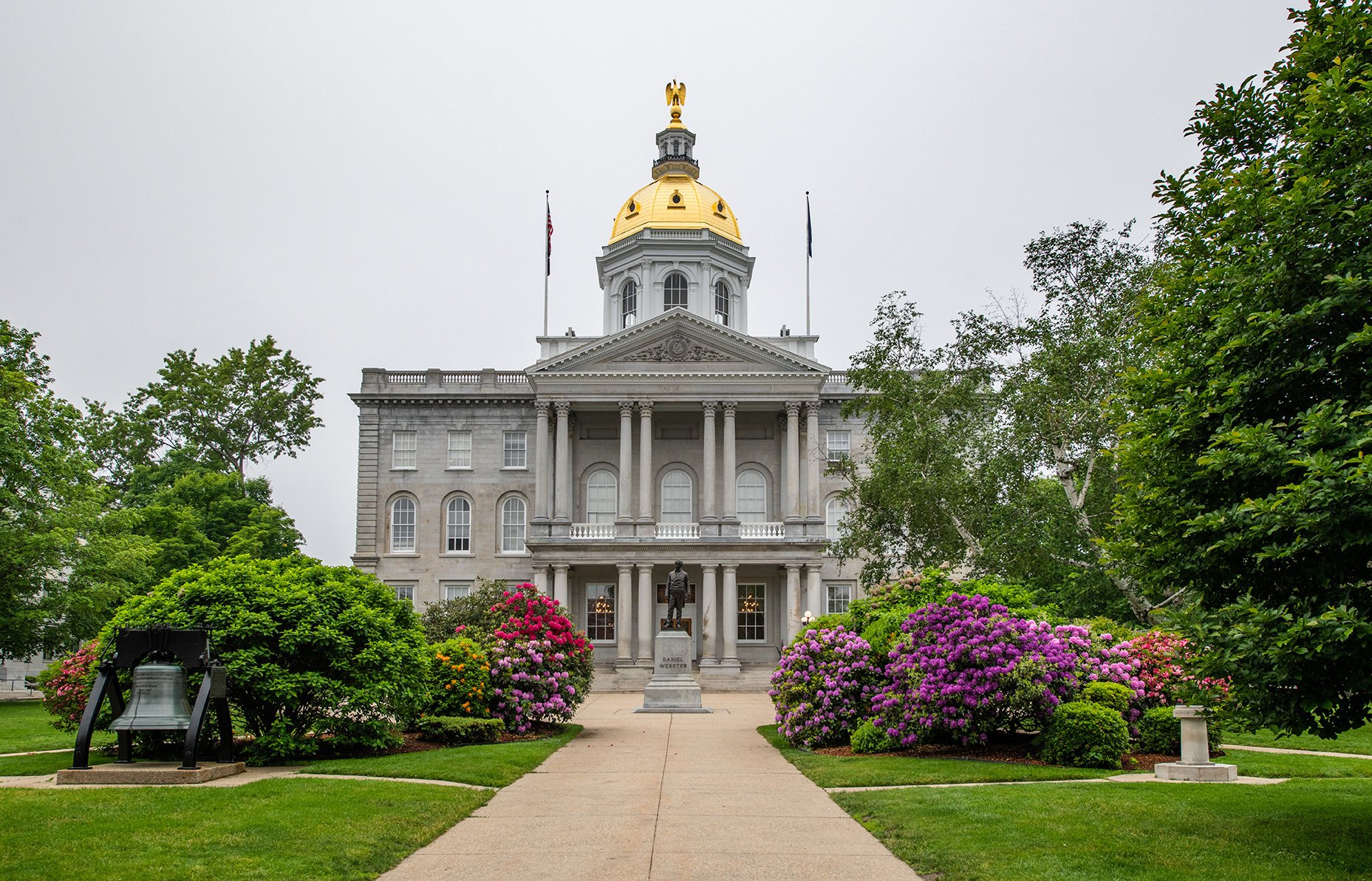
What’s Been Happening in NH
And Why It Matters to UsAs disabled and neurodiverse voters, recent bills and legislative changes in New Hampshire directly or will directly affect our rights, access, and everyday lives. Here's a quick summary of the most pressing issues:AI and Health Insurance DecisionsHB 1406 addresses the use of artificial intelligence and automated systems in health insurance determinations. As insurers increasingly rely on algorithmic tools to evaluate claims and prior authorization requests, oversight becomes essential to ensure that patients are not denied care due to flawed or opaque systems. For disabled and neurodivergent people, prior authorization barriers already delay or prevent access to critical treatment.When automated systems are used without sufficient clinical oversight, those risks can increase. Health coverage decisions should prioritize patient well-being and informed medical judgment, with appropriate safeguards around the use of automation.Communication Access and AutonomyHB 1215 (“Grace’s Law”) affirms that individuals have the right to communicate in the way that works best for them and works toward more consistent recognition of that right across service systems.
For individuals with developmental disabilities, communication access is directly tied to autonomy, safety, and quality of life. Policies that recognize and support diverse communication methods help ensure that people can meaningfully participate in decisions about their own lives.As with any policy change, thoughtful implementation will be important. However, the underlying principle aligns with broader goals of accessibility, dignity, and inclusion.Access to Medical Equipment Through PharmaciesHB 1249 expands the role of pharmacists by allowing them to prescribe and dispense certain medical devices connected to existing prescriptions, such as insulin-related supplies or respiratory equipment.This approach may improve convenience and reduce delays for individuals managing chronic conditions. At the same time, it highlights the importance of maintaining strong coordination between pharmacists, primary care providers, and specialists to ensure continuity and quality of care.Mental Health and Access to NatureSB 450 creates a pilot program allowing community mental health centers to provide state park passes to participants as part of supportive care.Access to outdoor spaces can play a meaningful role in mental health and overall well-being. This bill explores a community-based, low-cost way to expand supportive resources and encourage engagement with natural environments.Preserving Advisory Councils for Disability CommunitiesHB 1337 proposes eliminating the New Hampshire Council on Autism Spectrum Disorders. The council provides a formal channel for families, advocates, clinicians, and policymakers to collaborate on improving services and support systems for autistic individuals.
Advisory councils like this help ensure that policies affecting disabled communities are informed by lived experience and practical expertise. Changes to these structures raise important questions about how communication and collaboration between government and impacted communities will be maintained.Protecting Privacy in Health and Personal DataHB 1316 addresses transparency and oversight in the growing use of automated decision systems within healthcare and insurance administration. As data-driven tools expand, clear standards around privacy, accountability, and oversight become increasingly important.
Disabled people often interact with complex healthcare and support systems that involve sensitive personal data. Without appropriate safeguards, automated systems and data-sharing practices may create risks to privacy, autonomy, and equitable access to care.(2025 Bills)Voter Suppression Is Getting WorseThe NDA strongly opposes HB 613 because it is blatant voter suppression targeting disabled people. Requiring voters to request access and permission to vote 60 days in advance is discriminatory and outrageous. Voting is a right - not something we should have to fight for every election. This bill shifts the burden onto the people it is supposed to protect and violates the ADA and basic decency. NH Republicans are repugnant to even consider let alone draft such legislation.Further, other bills (HB1529, SB218, SB287) make it harder to register and vote absentee for disabled, elderly, housebound, low-income, and military voters. Now, absentee voting requires notarized documents, photo ID copies, and sworn statements which are a major burden for many in our communities.Public Education Is Being UnderminedVoucher expansions (SB295) will pull tens of millions or more from public schools, funneling it to elite or religious private schools including ones out of state. This means fewer resources for 90% of NH students, including those with IEPs or disability accommodations. The funding can even be used for the elites' ski classes!Attacks on LGBTQ+ Students and EducatorsBills like HB10, SB72, and SB96 require school staff to report students’ personal identities and relationships to parents, even when unsafe. These laws threaten trusted adult relationships, silence educators, and put LGBTQ+ students those at greater risk.Book Bans and Curriculum ControlBills HB324 and SB100 open the door to book bans and legal action against teachers. Educators could lose licenses for vague or retroactive offenses which will stifle honest education. This doesn't apply to voucher schools.Medicaid Cuts Threaten Our CareProposed changes (HB2, SB134) would add premiums and work requirements to Medicaid, pushing some families to the edge. At the federal level, proposed cuts could drop millions from Medicaid, restrict gender-affirming care, and hit rural hospitals hard. Disabled people shouldn't have to pay an income tax because they're disabled.Human Rights Are Under AttackNew bills (HB148, HB377, HB712) restrict trans youth’s medical rights and enable discrimination by sex in public spaces. Immigration-focused bills (HB511, SB62) increase state cooperation with ICE and reduce protections for undocumented and mixed-status families. This is a threat to disabled immigrants and those with chronic health needs.Energy and GunsNH is pushing nuclear and fossil fuel priorities (HB189, HB504) with little regulation, serving corporate interests like AI and crypto. Gun laws (HB551) reduce manufacturer liability even after reports of faulty firearms.
About the Alliance
The Neurodiverse and Disabled Alliance (NDA) is a group of Democratic organizers, advocates, and community members working to create a formally recognized constituency caucus within the New Hampshire Democratic Party.The NDA is the largest eligible constituency, with over 210,000 members. Our goal is to uplift the strengths, address the needs, and amplify the voices of Neurodiverse and Disabled people across the state.We are led by members of these communities and grounded in the values of:Inclusion — We trust and affirm self-identification, including self-diagnosisEquity and Access — We fight barriers in politics, policy, and participationCollective Power — We believe that by organizing together, we can reshape our party and our futureOur efforts include supporting Democratic candidates, connecting members across NHDP committees and caucuses, engaging marginalized voters, and working to ensure that disabled and neurodivergent people are not just present—but leading at every level of decision-making.Whether you’re a community member, caregiver, or ally—we invite you to be part of this movement.
NDA CAUCUS
CHAIRMAN
ADAM THOMPSON

Adam Thompson is a community organizer, educator, disabled veteran, and lifelong DEMOCRAT based in Nashua, New Hampshire. He serves on the Organizing Committee for the Neurodiversity and Disability Alliance (NDA) Caucus as Vice Chair - Veteran Outreach and Strategic Planning, where he works to build a more accessible, inclusive, and justice-centered political future.A proud, active duty veteran of the United States Marine Corps, Adam deployed in support of Operation Iraqi Freedom in the spring of 2003. That experience taught him important leadership lessons and continues to shape his lifelong commitment to fighting for equity, dignity, and systemic change... especially for communities too often left out or left behind.Adam is also a former public school teacher with five teaching licenses in mathematics, both earth and life sciences, and history, all for grades 6-12. In his decade in front of the classroom, he has taught students facing serious systemic barriers, including poverty, trauma, and discrimination. Adam also experienced first hand the importance and necessity of quality education for English Language Learners while an ESL teacher.In all his work, from supporting and running campaigns, to organizing within party structures to showing up for grassroots movements, Adam centers the lived experience of immigrants, disabled people, veterans, the marginalized and disenfranchised, and working-class communities. His approach is collaborative, people-powered, and rooted in the belief that liberation is collective.Adam marks his greatest accomplishment as marrying the love of his life, Shirley, a woman much more beautiful and accomplished than he.

Disability & Neurodiversity: 2025 Talking Points for Candidates and Allies
New Hampshire Community Priorities1.
Prohibit Compelled, Non-Medical, Faith Based, etc. Treatment (e.g. "Wellness Farms")
Oppose all types of "Wellness Farms" and any other type of compelled program (or suppsoed "treatment"), especially where faith-based, non-scientifically based, or other hokum is utilized as a substitute for psychiatric medications and therapy2.
Communication Bill of Rights
Support for the Communication Bill of Rights - ASHA - Communication Bill of Rights, 3rd Ed.3.
Demand Coverage and Access to Mental Health Services
Support mandatory health insurance coverage of mental health services, including affordable and prompt access to therapy.4.
Ready, Legal Access to Psychiatric Medications as Determined by a Doctor of the Patient's Choosing
Commitment to ensure continued patient access to psychiatric medications, including SSRIs, antidepressants, etc., as determined by a doctor of the patient's choosing. Oppose all types of tracking lists and other Government (or insurance company) intrusion into the doctor-patient relationship.5.
COMMUNICATION SAFETY – Blue Envelope Program
A new statewide initiative helps autistic drivers and those with trauma-related conditions communicate more safely with police during traffic stops.
The program should provide voluntary identification tools for residents, and mandatory officer training to reduce misunderstandings and prevent escalation.
We need support for proper implementation, education, funding, and expansion to other settings like schools and hospitals.6.
CRISIS RESPONSE REFORM – Behavioral Crisis Services for People with Intellectual Disabilities
A state commission is now reviewing how crisis services work (or fail) for individuals whose primary diagnosis is developmental or cognitive, not psychiatric.
Historically, people in this category are excluded from mental health crisis care or sent to jail instead.
We’re urging leaders to support permanent crisis alternatives like specialized mobile teams and short-term stabilization centers.7.
SPECIAL EDUCATION EQUITY – Clarifying Rights and Definitions in Public Schools
New updates to New Hampshire’s education laws now provide clearer definitions of who qualifies for special education, including children with brain injuries and developmental delays.
The law also ensures older students (ages 18–21) retain access to services they were previously entitled to.
Without training and resources, schools may still fall short. We need to follow through.8.
VOTING ACCESS – Protecting the Vote for All Citizens
Disabled residents continue to face barriers when voting, including inaccessible polling places, complex absentee processes, and lack of transportation.
We call for modernized voting options, including expanded early voting and mail-in access with no extra hoops to jump through,.as well as to identify and prevent other means to suppress disabled voters.9.
HOUSING ACCESS
Affordable and Accessible Homes Are Scarce
People have had to wait years for housing that meets basic accessibility standards.
The shortage is especially dire for people who also need on-site services or who live in rural areas.
We need strong leadership to enforce accessibility rules and fund new housing construction that meets the disabled community's needs.10.
TRANSPORTATION You Can’t Participate If You Can’t Get There
Many towns offer no reliable transportation for disabled residents, and paratransit is limited or non-existent.
Lack of transportation keeps people isolated from jobs, healthcare, voting, and civic life.
We urge candidates to support funding and innovation in rural and disability-accessible transit.11.
HEALTHCARE WORKFORCE – Direct Care Workers Are Underpaid and Burning Out
Direct care providers (the people who help us live independently) are leaving the field in droves due to low pay and burnout.
Without them, disabled people face institutionalization and/or unsafe conditions.
We need better wages, career pathways, and respect for this essential workforce.12.
DISABILITY AND ECONOMIC JUSTICE – We’re Punished for Trying to Work
Many disabled people lose critical healthcare and housing benefits if they earn even modest income.
Outdated asset limits, income cliffs, and sub-minimum wage laws trap disab people in poverty.
We need to reform these systems so disabled people can thrive, not just survive.
Why We Formed the NDA CaucusWe are disabled and neurodivergent members of the New Hampshire Democratic Party. We come from diverse backgrounds, but we share one goal: to organize for recognition, rights, and representation.This is our time to claim space and to build the political power our communities deserve.What’s at StakeOur rights are already under attack.Across New Hampshire, Free Staters, Republicans, and MAGA lawmakers have introduced -- and in some cases passed -- legislation that directly targets disabled voters. These include bills designed to:Create unnecessary barriers to votingLimit accommodationsUndermine equal access to the democratic processThese are not abstract threats. They are real. They’re happening now. And they’re being replicated in states across the country.We refuse to be silent. We refuse to be sidelined.Our Mission and Goals:The NDA Caucus exists to uplift and organize our community from within the Democratic Party. We are forming this caucus to:Support Democratic candidates who reflect our values and needsBuild stronger connections within the NH Democratic Party, including with town and county committees, and other constituency caucusesProtect and secure the rights of neurodiverse and disabled people in New Hampshire and beyondEngage and enlist voters who are too often ignored, silenced, or excludedChampion inclusive leadership rooted in accessibility, equity, and lived experienceWe are not asking for permission to exist. We are demanding a seat at the table and you and I are bringing our community with us.How You Can Help:Sign the NHDP Petition! Have you already signed the petition? You can do even more:Forward the petition to friends and familyShare the campaign on social mediaInvite others to get involved, especially disabled and/or neurodivergent DemocratsVolunteer! Even an hour of your time makes a differenceStay informed because your voice and presence matterIf you'd like to connect or get involved, reach out to us below.This Is Our MomentWe’re building power, not just for today, but for future generations of disabled and neurodivergent people in New Hampshire.If you’ve ever felt ignored, isolated, or dismissed in political spaces, know this: you are not alone and you belong here. We know this because you tell us, and we believe you.Together, we’re forming something strong, meaningful, and long overdue.In solidarity!!! ✊

2025 Municipal Candidates
We're proud to share that every candidate connected with the NDA community won their race this cycle!While we could not issue formal endorsements under NHDP rules, these victories reflect the strength of our shared values and the growing impact of Neurodivergent and Disabled voices in public service.This clean sweep shows what's possible when our community is organized, visible, and supported. We're excited to keep building on this momentum, and we'd love to have you involved as we grow.Together, we're proving that accessibility, inclusion, and justice win.

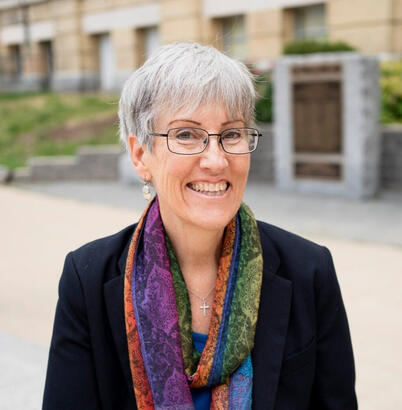
Alex Dubois
for Board of Education Zone C (Wards 8, 9, & 10)
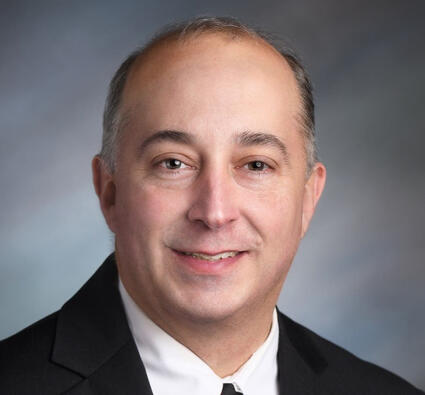
Alex Dubois is proud to announce his candidacy for the Concord Board of Education Zone C (Wards 8,9, and 10)! Election Day is November 4th.After graduating from Keene State College with a degree in History and minor in political science in 2018, Alex began his career as a special education teacher. He has taught at two private out of district placements for students with intensive special needs or challenging behaviors and has recently made the transition to public schools. He believes that our schools have a duty to educate all of the children of today to be leaders of tomorrow, regardless of their levels of need.Teachers are the ones who can make this happen, and they are entitled to their own freedom of expression in their classrooms. Alex spent the early part of the summer in a successful effort to convince Gov. Ayotte to veto the controversial Book Banning Bill, HB-324.A Concord resident of Ward 9 since 2020, he is proud to be involved in the community giving back or helping others. Some local organizations Alex has volunteered for in the city include: Future in Sight, Concord Coalition to End Homelessness, ABLE NH, and the Market Days Annual Festival.One of the most important issues facing schools in his community today is the overall underfunding of public education and rising costs, especially regarding special education services and transportation.

Amber Morgan
Nashua Alderman-at-Large
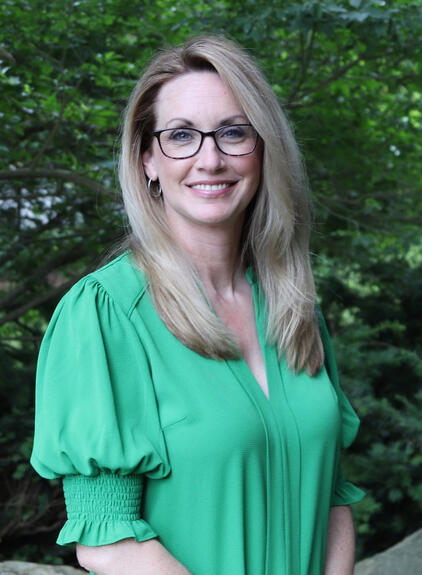
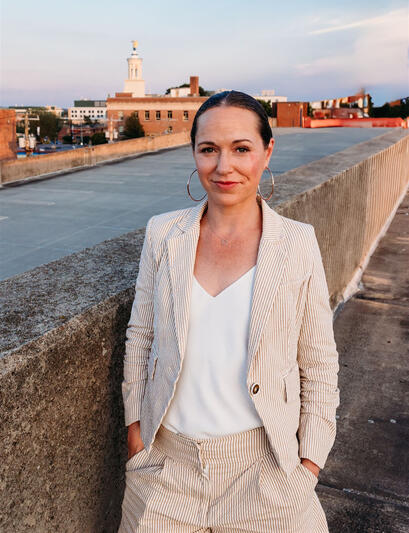
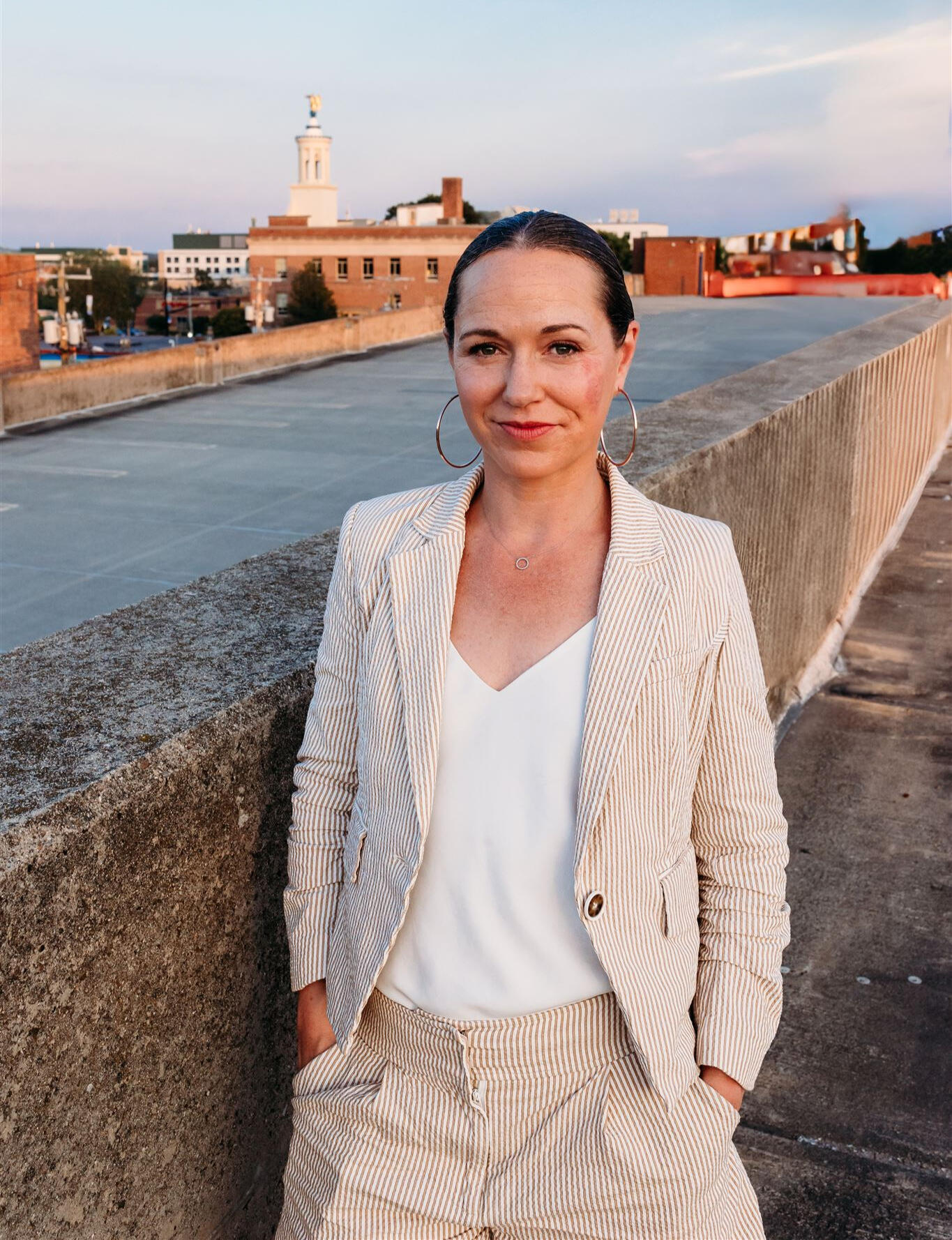
Amber Morgan is a proud Nashua born resident, small business owner, veteran advocate, and mother who leads through action. From revitalizing a historic storefront to founding a veterans nonprofit, she has shown time and again that she doesn't wait for change, she makes it happen.As Alderman-at-Large, Amber is committed to keeping housing within reach for families, building a safer and more vibrant downtown, and cutting through red tape so residents, builders, and small businesses can thrive. As a member of the NDA Caucus, one of Amber's chief concerns she plans to address are the inconsistent Accessible Pedestrian Signals (walk signals).Rooted in Nashua and dedicated to its future, she brings energy, urgency, and a proven record of rolling up her sleeves to get things done.
Alicia Gregg
for Alderman-at-Large
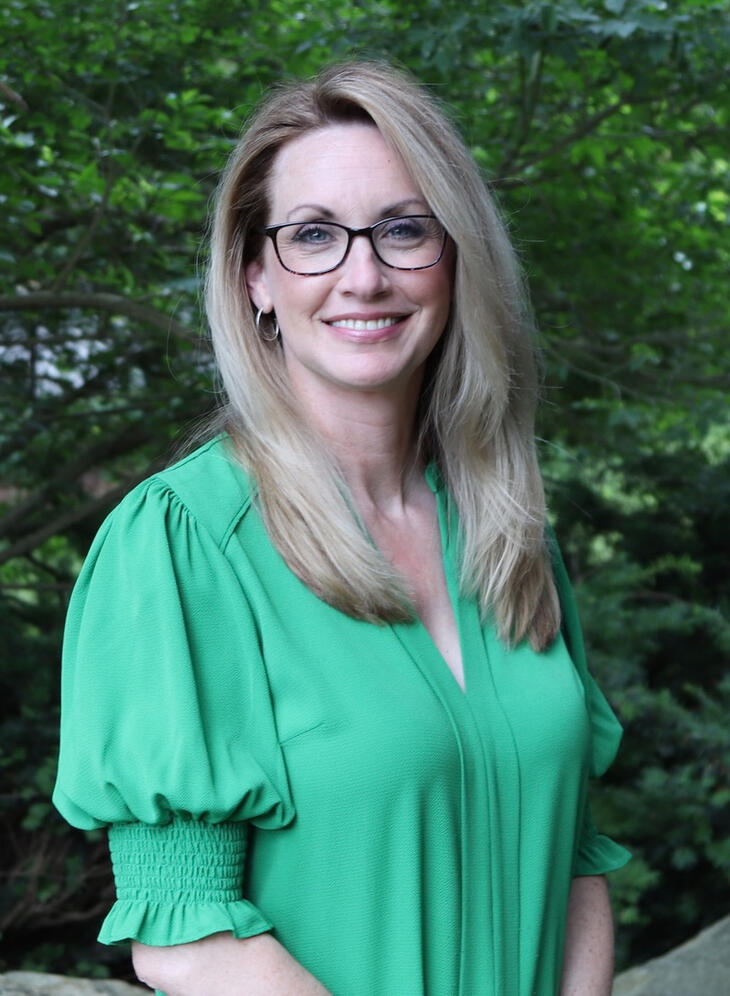
Alicia Gregg is a dedicated community advocate, State Representative, and mom who has made it her mission to stand up for children, families, and vulnerable residents in Nashua. As a victims’ advocate, Alicia has worked closely with families navigating complex systems, ensuring that voices too often overlooked are heard and respected.She believes that Nashua must be a city where everyone, including those living with disabilities, can fully participate and thrive. Alicia is committed to improving accessibility in city spaces, strengthening support services, and making sure city decision-making always includes the perspectives of people with disabilities and their families.With a proven track record of leadership and advocacy, Alicia brings compassion, determination, and accountability to her role. She is running for Alderman At-Large to ensure Nashua’s government is responsive, inclusive, and forward-looking.
Derek Thibeault
for Alderman Ward 8
Alderman Derek Thibeault is a lifelong Nashua resident with deep family roots in the city. He has built his public service on commitment, accessibility, and fairness.As Ward 8 Alderman and Chairman of the Nashua Democratic Committee, Alderman Derek Thibeault brings nearly three decades of leadership experience in the private sector to city government, where he is known as a steady team player and problem solver. His lengthy career within a single major company reflects loyalty, stability, and proven reliability, all of which are qualities he carries into public office. In Nashua, Alderman Derek Thibeault has helped and will continue to expand property tax relief for seniors, veterans, the blind, and residents with disabilities, while also backing new para and education contracts that include important measures to attract and retain special educators.Before serving as Alderman, Derek dedicated years of service as a Ward Clerk and Selectman, where he was known for his commitment to ensuring elections were accessible, fair, and welcoming to every voter. From safeguarding clear procedures to supporting voters with disabilities, he brought the same hands on care to local elections that he now brings to citywide policymaking. Beyond government, he has served as a youth sports leader and volunteer, always putting community first. A husband and father of three, Derek’s approach to leadership is grounded in the values of family and service, carrying forward the example of his grandfather, a Nashua police officer, and his father, a Vietnam veteran. His dedication shows in everything he does: building a Nashua that is fairer, stronger, and more accessible for every resident.
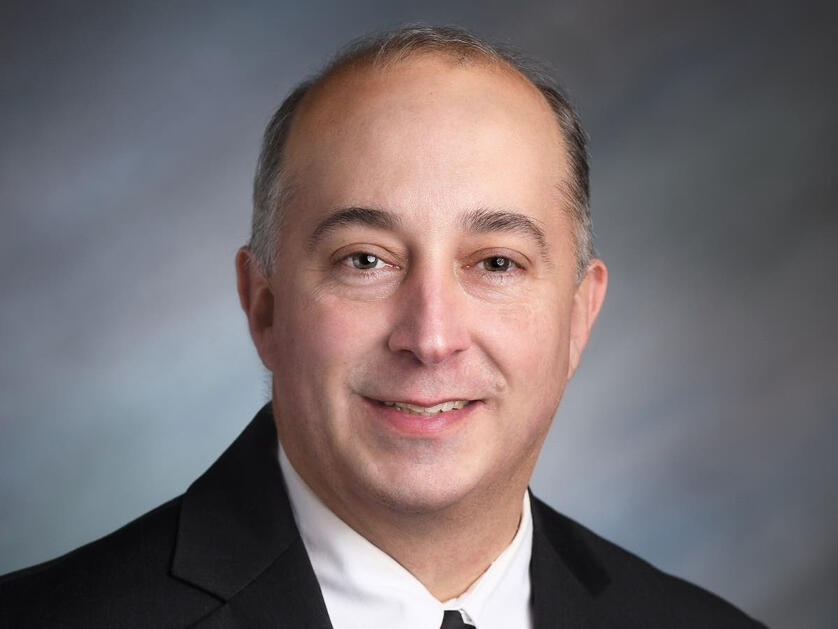
Leslie Want
Manchester School Board
Ward 4
Leslie Want has spent more than three decades working to support Manchester's students, teachers, and families. As the longest-serving member of the Manchester Board of Education, she has consistently shown up, listened, and led with fairness.Her record reflects a deep commitment to putting students first and importantly including students with disabilities, developmental differences, and learning needs ensuring that every child has the chance to thrive. From modernizing Manchester schools and technology to championing smaller class sizes and stronger curriculum, Leslie has delivered results that matter.The NDA Organizing Committee appreciates Leslie's collaborative approach and her dedication to equity in education. We are encouraged by her vision for 21st-century schools and her steady focus on accountability, inclusion, and opportunity for all.We are proud to support Leslie Want as Ward 4's candidate for School Board!
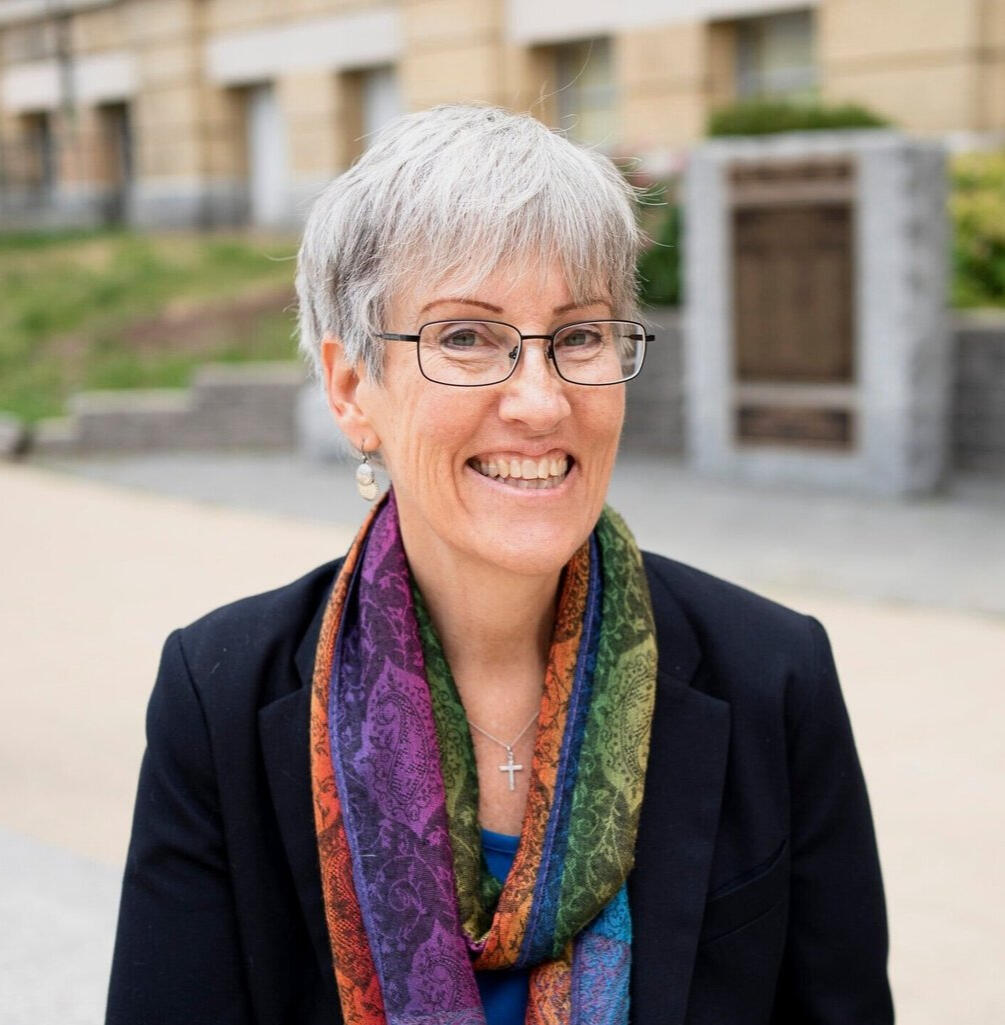
Strange Crew
At
Strange Brew!
September 23rd, 2025
6pm to 8pm
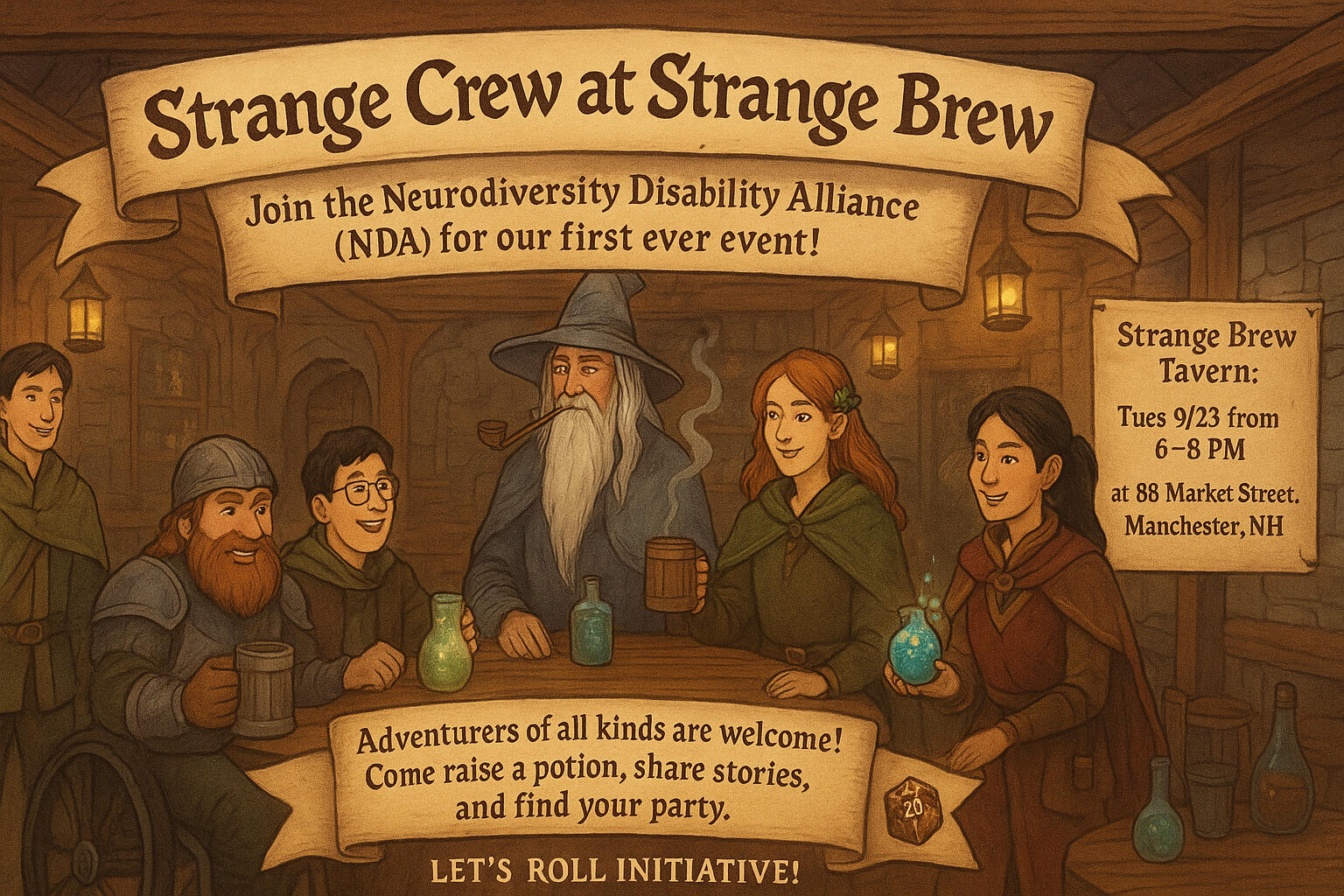
Please join the Neurodiversity and Disability Alliance (NDA) for our first ever event and caucus formation petition! We are looking for members, allies, friends, and supporters who can help us gather the remaining signatures we need!Come join us, bring your friends, share your story, and join our band of adventurers!Please note, this is a free event and NOT a fundraiser. Thanks to a generous donation from our Board Members, Attorney Justin Finn and Dr. Kavita Finn, PhD, we will be offering free appetizers to our guests (up to the full amount of the donation). Guests are responsible for their own beverages. Please imbibe responsibly; the NDA will assist with sober transportation should anyone need assistance.Strange Brew Tavern is located in Downtown Manchester at 88 Market Street.
...and it's FREE!!!
Breaking Down Ballot Barriers
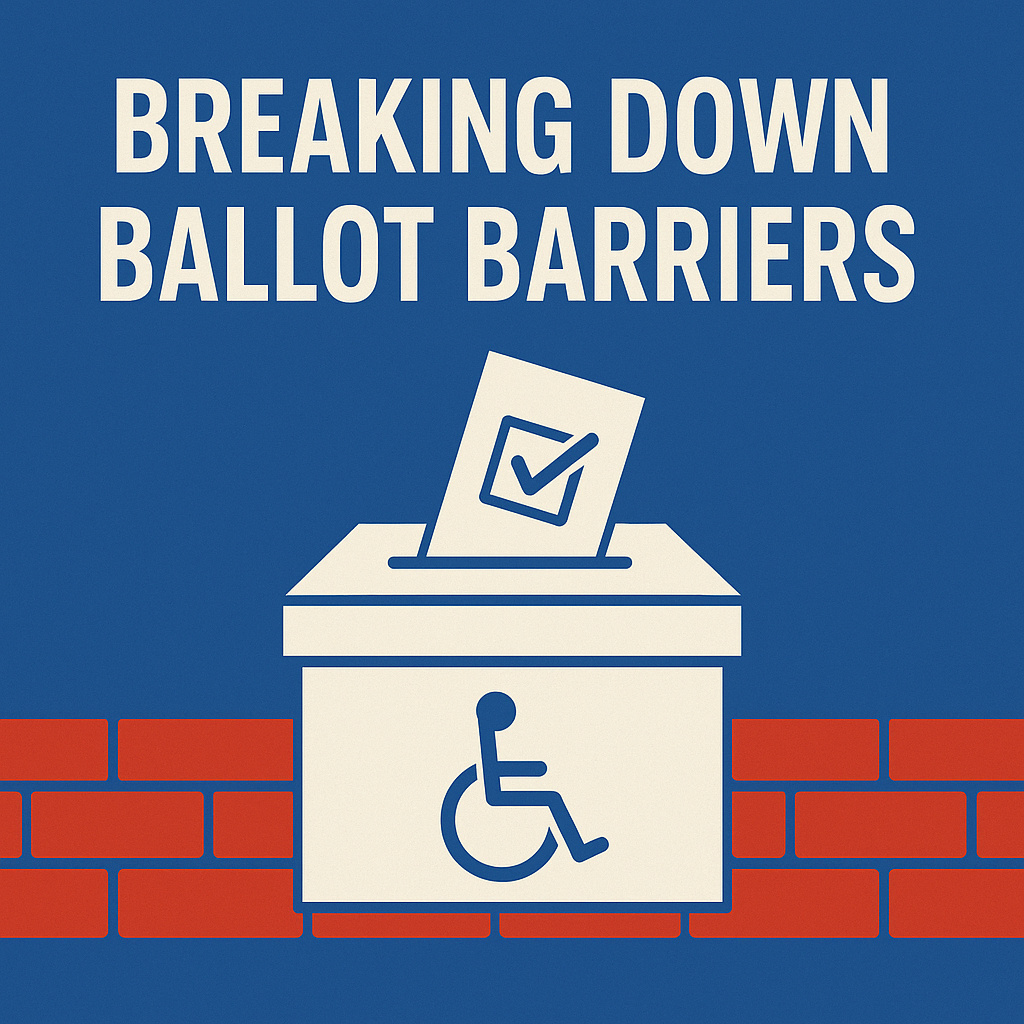
In recent years, New Hampshire has passed a series of laws that impose stricter documentary requirements for voter registration and absentee ballots. These laws erect barriers for many eligible voters. In 2024, House Bill 1569 was signed into law, eliminating affidavits as an alternative for new registrants and requiring proof of U.S. citizenship (such as a birth certificate, passport, or naturalization papers) to register (NHPR, 2024). More recently, in 2025 the legislature approved bills (such as SB 218 and SB 287) extending these requirements to absentee voters: now voters applying by mail must submit proof of identity, citizenship, residence and age, either via ID submitted with the application, a notarized signature, or an in-person ID check (Voting Rights Lab, 2025). Advocates warn that these laws will disproportionately affect seniors, students, low-income people, rural voters, and those with disabilities especially those who don’t have ready access to documents like birth certificates, passports, or who may face time, distance, or convenience barriers in getting them (New Hampshire Bulletin, 2025). Already, during town meeting season, at least 96 people were turned away at polling places for lack of acceptable documentary proof of citizenship (New Hampshire Bulletin, 2025).These new restrictions mean that many eligible voters will need access to a notary simply to exercise their constitutional right to vote. For residents who are homebound, disabled, or otherwise unable to travel, this requirement can create an almost insurmountable barrier. Rather than ensuring election integrity, the result is that the most vulnerable members of our community are at risk of being silenced.That’s why we are teaming up with Nashua Alderman Patricia Klee and creating a team of volunteer mobile notaries to provide free services directly to those who need them. By bringing notarization into people’s homes and communities, we can ensure that no one is denied the right to vote because they cannot access or afford a notary. If you are a notary willing to volunteer, or if you know someone who may need assistance, please reach out and join us in protecting the right to vote for all!

Thank you!
Thank you for joining the mailing list!
Your information is SAFE with us, and will ONLY be used for the direct purposes of our Caucus. You have our word.
NDA Executive Board Elections
CONGRATULATIONS NEW BOARD MEMBERS!CHAIR
Adam Thompson
VICE CHAIR
Lisa Beaudoin
SECRETARY
Sarah Chadzynski
TREASURER
Victoria Riehl
MEMBER-AT-LARGE
Chris Farrell
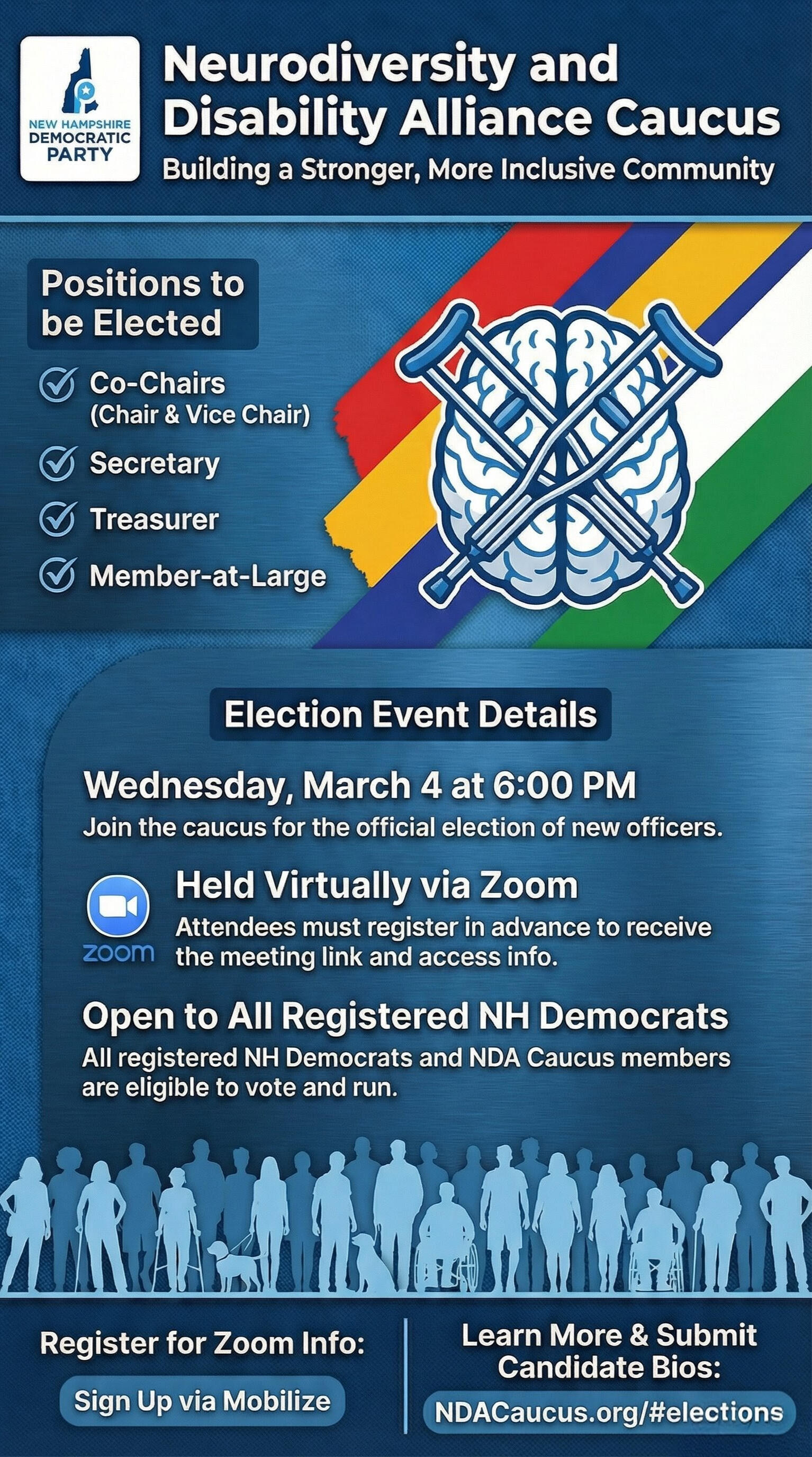
Join us Wednesday, March 4 at 6:00 PM for the Neurodiversity and Disability Alliance Caucus Officer Elections!As the NDA continues building toward full participation as a New Hampshire Democratic Party constituency caucus, this election marks an important step in establishing our leadership and strengthening our community. The meeting will be held virtually via Zoom; access information will be shared through the Mobilize link upon registration.Positions to be elected include Co-Chairs (one Chair and one Vice Chair per NHDP policy), Secretary, Treasurer, and Member-at-Large. All registered members of the NDA Caucus are eligible to vote and run, provided they are registered Democrats, New Hampshire residents, and have signed the NHDP Constituency Caucus Petition of Membership. Candidates may self-nominate during the meeting. Individuals interested in running are also welcome to share their name and a brief bio (100 words or fewer) in advance to be listed at NDACaucus.org/#elections.This meeting will be fully remote and accessibility requests are welcome; please direct accessibility requests to the NHDP Party Affairs Director at least seven days before the election. Register via Mobilize to receive Zoom information and updates: [Mobilize link].
Hi everyone,We're canceling our end-of-October NDA Caucus meeting so we can put all our energy where it matters most right now: getting out the vote.With Election Day just weeks away, we encourage every member to get involved with Organize NH's get-out-the-vote efforts. Whether you can knock doors, make calls, send texts, or help with events, there's a shift that fits your schedule. You can find opportunities and sign up here:https://www.mobilize.us/organizenh/Every conversation with a voter counts, and these final weeks are when our work makes the biggest difference… AND YOUR VOICES MATTER!If you have questions or want to team up with other caucus members for a shift, hop onto our Facebook group and coordinate with each other or reach out to your caucus officers.We'll be back on our regular meeting schedule after the election. Thank you for everything you do. Now let’s make sure our voices are heard in this election!September General Membership Meeting Agenda
Date: September 22, 2026
Time: 6:30 PM
Location: Virtual (Zoom)
(Meeting Zoom link has been published in our Facebook Group and via email. Please look for an email from [email protected] in your inbox and spam folders)1. Call to Order
-Welcome
-Meeting begins2. Access Check
-Review of access needs and accommodations
-Reminder that the Zoom room opened early for agenda review and support3. Opening Remarks
Welcome new and returning members
Overview of the evening
Officer inroductions4. DNC & NHDP Disability Caucus GOTV Rally
Update on planning
Event format and goals
Accessibility and communication considerations
NDA participation and volunteer opportunities5. Legislative Update — Lisa
Current legislative developments and LSRs
Disability related issues and advocacy priorities6. Voting Accessibility Discussion — Sarah
What makes Barnstead, NH exempt from ADA voting accommodations?
Overview of the issue
Voting accessibility requirements and accommodations
Discussion and questions7. NDA Logo Design Contest — Adam
Introduction of the logo design contest
Submission guidelines and timeline
How members can participate8. Upcoming Events — Victoria
Upcoming NDA events
Partner and community events
Volunteer and participation opportunities
How members can support the calendar9. Treasurer’s Report — Victoria10. Announcements
Member announcements11. Adjournment
NDA Logo Design ContestThe Neurodiversity and Disability Alliance is looking for a new logo, and we want our members to help create it!Who Can Enter
- The contest is open to current NDA members.
- Members may submit more than one design.
- No professional design experience is necessary.Design Requirements
Submissions should:- Represent the Neurodiversity and Disability Alliance and its mission and community.
- Be respectful and inclusive of people with different disabilities and neurotypes.
- Work both with and without the full organization name.
- Be clear and recognizable at both large and small sizes.
- Be suitable for use on websites, social media, printed materials, signs, apparel, and other NDA materials.
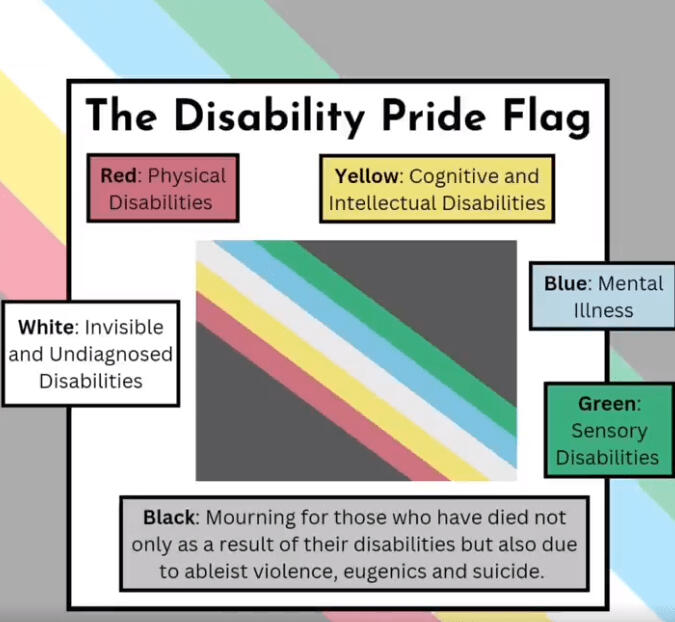
- Avoid imagery or language that stigmatizes, stereotypes, or excludes members of the disability or neurodivergent communities.Designers are welcome to use symbols, colors, lettering, abstract designs, or other creative approaches. Beyond using the Disability Flag colors and and reference to NH politics, there are no required symbol or color scheme.Original Work
- Submissions must be the entrant's own work or built on the current logo
- Designs may not incorporate copyrighted logos, artwork, characters, photographs, or other material that the entrant does not have permission to use.
- Stock graphics or design elements may only be used if their licensing allows NDA to freely reproduce and modify them.AI-Assisted Designs
AI-assisted design tools may be used, but entrants must disclose if generative AI was used to create a significant part of the submission.Entrants remain responsible for ensuring that their submission does not intentionally copy an existing logo, trademark, or copyrighted work.How to Submit
Each submission should include:- The logo design
- The entrant's name
- A brief description of the idea or meaning behind the design, if desired
- Disclosure of any AI-generated, stock, or third-party design elements usedSubmission deadline:October monthly meeting
Submission method: Email [email protected]Choosing the Logo
- Eligible submissions will be shared with NDA members.
- NDA members will have an opportunity to vote on the designs.
- The contest may use a preliminary round if a large number of designs are received.
- The design receiving the final member selection will become the basis for NDA's new logo.NDA reserves the right to alter or remove a submission from consideration if it does not meet the contest rules or cannot legally or practically be used as an organizational logo.Winning Design
By submitting a design, entrants agree that, if their design is selected:
- NDA may use the design for organizational purposes without charge.
- NDA may resize, reproduce, reformat, or make reasonable modifications to the design so it works across different formats and media.
- The winning designer will be credited publicly unless they prefer not to be identified.
- The designer will cooperate with NDA in providing the highest-quality available version of the design and, when possible, editable or vector files.The original designer will retain credit for creating the design, while NDA will have the continuing right to use and adapt the selected logo.**Most Important **Have fun with it.We want the new NDA logo to come from our community and reflect who we are. Members should feel free to be creative and show us what the Neurodiversity and Disability Alliance means to them.
Neurodiversity and Disability Alliance Caucus Bylaws
Chapter 1. Name
1. The name of this caucus shall be the Neurodiversity and Disability Alliance
Caucus, hereinafter referred to as “the Caucus” and/or “the NDA,” within the
New Hampshire Democratic Party (NHDP).
Chapter 2. Purpose
1. The Neurodiversity and Disability Alliance Caucus (NDA) consists of NHDP
members from diverse cultural and socioeconomic backgrounds volunteering
their time to showcase the strengths, advocate for the issues, and meet the
needs of the overlapping Neurodiverse and Disabled Communities. The NDA
pursues this mission by:
a. Supporting Democratic candidates seeking public office in:
i. Local, municipal, town, and city elections
ii. County elections
iii. State elections
iv. National elections
b. Providing networking opportunities for community members within the
NHDP, including but not limited to:
i. NHDP Town Committees
ii. NHDP County Committees
iii. Other NHDP Constituency Caucuses
c. Protecting and securing the rights of Neurodiverse and/or Disabled
persons within New Hampshire and beyond
d. Engaging marginalized neurodiverse and/or disabled voters
e. Promoting the ideas and principles of the Democratic Party
f. Educating and advising the New Hampshire Democratic Party, its
committees, and affiliated organizations on policies, practices, and
procedures that affect neurodiverse and/or disabled individuals, including
identifying and addressing practices that unintentionally exclude,
marginalize, or disadvantage members of these communities, and
promoting inclusive and accessible alternatives.
Chapter 3. Membership
1. Membership of the Caucus shall consist of any registered Democrat in the State
of New Hampshire who shares the same immutable traits of the Neurodiverse
and/or Disabled Communities, through any means of diagnosis, including
self-diagnosis. It shall not be necessary for members to disclose any medical or
personal information regarding their status.
2. In accordance with NHDP rules, membership shall be confirmed by the
submission of a completed petition to the appropriate member of the Executive
Committee. The Caucus must maintain at least fifty (50) completed petitions one
year after being recognized by the NHDP State Committee and each year
thereafter.
3. Membership in the NDA shall remain free and accessible. We affirm that civic
participation is a right, not a commodity, and we reject financial barriers that
perpetuate inequality or silence disadvantaged communities. The NDA shall
never charge a membership fee, as we believe socio-economic status must
never be an obstacle to political voice or engagement.
Chapter 4. Leadership
1. An Executive Committee shall consist of a Chair, Vice Chair (or Co-Chair),
Secretary, and Treasurer, and additional at-large members (at least one) or
committee chairs as deemed necessary by the Executive Committee. The
Executive Committee shall oversee the Caucus’s operations and make decisions
in line with its mission.
2. Duties of Officers:
a. Chair(s) – Preside over meetings, and lead strategic initiatives. In cases
where the Caucus has opted for Co-Chairs, the Co-Chairs shall alternate
chairing meetings. The Chair may establish standing and ad hoc
committees to support the work of the Caucus
b. Vice Chair – Assist the Chair, and assume duties in their absence
c. Secretary – Maintain records and meeting minutes
d. Treasurer – Manage finances and reports on budgetary matters
e. Member-at-Large
i. Shall assist in recruiting and engaging new members, promoting
accessibility and inclusion within the Democratic Party, and
strengthening relationships with allied organizations and
communities.
ii. At-Large Members shall assist caucus officers and committees as
needed in carrying out the work of the caucus, including
communications, policy development, and event coordination.
3. Officers of the Executive Committee shall disclose any potential conflict of
interest, including but not limited to financial, familial, quid pro quo, and political
relationships that could influence their duties. No officer shall vote on any matter
in which they have a financial or direct personal interest. Disclosure of such
conflicts shall be made in writing to the Executive Committee and recorded in the
minutes. A conflict of interest shall also be deemed to exist when an officer’s
spouse, domestic partner, immediate family member, or household member is
the subject of a matter before the Executive Committee, or when the matter
arises from conduct involving such a person.
a. Any officer with such a conflict shall disclose the conflict and recuse
themselves from discussion, deliberation, and voting on the matter. The
recusal shall be recorded in the minutes.
b. Recusal under this section shall not be considered misconduct and shall
not affect the officer’s standing within the NDA.
4. Election of Officers:
a. An election must be held every odd year to elect a new Executive
Committee. The election must be held in coordination with the NHDP
midterm convention. Any registered New Hampshire Democrat that has
an up to date and signed petition for the NDA is a voting member.
b. At the biannual meeting, the membership shall elect the Chair, Vice-Chair,
Secretary, Treasurer, and a Member-at-Large. Each officer shall serve a
two (2) year term. Officers shall be elected by a majority of members
present and eligible to vote at a meeting of the NDA. Nominations for any
office shall be made from the floor. Nominations shall be made by an
eligible voter of the NDA.
c. All officers shall hold office until the biannual meeting of the NDA, held on
odd numbered years. All officers shall serve for two (2) years beginning
immediately following their election with elections held according to the
NHDP schedule, except in the case of special elections and organizing
elections in which terms will expire upon the next odd numbered year
election.
d. The NDA fully supports inclusion of allies in our work. However, the
Executive Committee should be representative of the disabled and/or
neurodiverse community. Chair, Vice-Chair, Secretary, Treasurer, and a
Member-at-Large shall identify as members of the disabled and/or
neurodiverse community.
5. Officer Resignation, Suspensions, Removal of Officers, and Vacancies:
a. In the eventuality of a vacancy on the Executive Committee, that position
shall remain vacant until such time as a special election is called of the
membership to fill said vacancy.
i. If the Chair’s position is vacated, the Vice-Chair shall assume the
role of Chair, and a special election shall be held to fill the position
of Vice-Chair and shall hold that position until the next biannual
meeting election.
ii. A special election shall be held within 45 days of the vacancy of
Vice Chair, Secretary, Treasurer, or Member-at-Large and the
replacement shall be elected by a majority of members present and
eligible to vote at a meeting of the NDA.
iii. The Executive Committee shall provide the Chair of the NHDP and
the entire membership of the NDA a report on the vacancy of office
and notify the membership of an election fourteen days from the
election date.
b. Resignation: Any officer may resign at any time by providing written notice
to the Chair (or, if the/a Chair is resigning, to the Vice Chair or Co-Chair).
The resignation shall be effective immediately unless a later date is
specified.
c. Suspension: A suspension shall be temporary, shall not exceed forty-five
(45) days, and shall require a majority vote of non-conflicted Executive
Committee members present. An officer may be suspended for actions
that non-conflicted members of the Executive Committee may deem to be
inconsistent with the mission or values of the Caucus.
d. Removal: An officer may be removed for failure to fulfill their duties,
misconduct, two (2) unexcused and consecutive absences, or actions
deemed inconsistent with the mission or values of the Caucus. Removal
requires a two-thirds (2/3) vote of the Executive Committee members
present, eligible, and non-conflicted to vote, following notice to the officer
and an opportunity to respond within ten (10) days.
Chapter 5. Meetings
1. The Caucus shall hold regular meetings quarterly to discuss policy, plan
initiatives, and vote on major decisions.
2. The Executive Committee shall hold regular monthly meetings to discuss policy,
plan initiatives, and vote on major decisions.
a. All meetings of the Executive Committee shall be noticed to all Executive
Committee members at least seven (7) days in advance. In cases of
genuine emergency, as much notice as possible should be given. Notice
shall be provided in writing and shall include the date, time, and method of
the meeting.
b. The meeting notice shall identify the matters on which action or votes may
be taken. Discussion may occur on any topic properly before the
Executive Committee; however, no vote or binding action shall be taken
on any matter not identified in the meeting notice, except by unanimous
consent of the Executive Committee members present.
c. In cases of genuine emergency, an Executive Committee meeting may be
called with shorter notice. Any action taken at such a meeting shall be
limited to addressing the emergency identified in the notice.
3. All members in good standing shall have the right to vote. Decisions shall be
made by a simple majority unless otherwise specified.
4. Quorum must be established at the start of any meeting where official business
or voting is conducted.
a. A quorum for general membership meetings shall consist of:
i. First year after recognition: At least twenty percent (20%) of
members in good standing, including at least three (3) officers of
the Executive Committee.
ii. Second year after recognition: At least twenty-five percent (25%) of
members in good standing, including at least three (3) officers of
the Executive Committee.
iii. Every year thereafter: At least one-third (1/3) of all members in
good standing, including at least three (3) officers of the Executive
Committee.
b. A quorum for Executive Committee meetings shall consist of a simple
majority for discussion. However, no vote or binding action may be taken
unless at least two-thirds (2/3) of eligible and nonconflicted members of
the Executive Committee are present. No official votes or decisions may
take place without a quorum.
5. The order of business at General Meetings shall be:
a. Call to Order
b. Officer Roll Call
c. Chair’s Message
d. Adoption of Reports
i. Treasurer’s Report
ii. Standing Committee Reports
iii. Ad Hoc Committee Reports
iv. Executive Committee Report
e. Old business
f. New business
g. Announcements
h. Adjournment
6. The order of business at Executive Committee meetings shall be:
a. Call to Order
b. Roll Call
c. Adoption of the Minutes
d. Adoption of Reports
i. Treasurer’s Report
ii. Standing Committee Reports
iii. Ad Hoc Committee Reports
iv. Reports from individual members
e. Old Business
f. New Business
g. Announcements
h. Adjournment
Chapter 6. Standing and Ad Hoc Committees
1. The Executive Committee or Chair may establish standing or ad hoc committees
as necessary to carry out the work of the Caucus. Each committee shall be
formed with a specific purpose and scope of responsibility. The standing and ad
hoc committees shall report to the Executive Committee.
2. Ad hoc Committees may include, but are not limited to, areas such as outreach,
accessibility, policy, advocacy, inter-caucus and local committee liaison work,
and event planning. Each committee shall include at least one Executive
Committee member who shall serve as liaison. Committee Chairs may be
appointed by the Chair or elected by members of the committee, and must be
members in good standing.
3. Ad hoc committees shall dissolve automatically upon completion of their purpose
or by vote of the Executive Committee. Standing committees may remain active
until dissolved or restructured by a vote of the Executive Committee.
Chapter 7. Code of Conduct
1. The Caucus is committed to maintaining a respectful, inclusive, and safe
environment for all members. Harassment, discrimination, or abusive behavior
shall not be tolerated.
2. Allegations of misconduct may be reviewed by the Executive Committee, which
shall have the authority to recommend mediation, censure, suspension, or
removal from the Caucus, subject to a vote by the Executive Committee in
accordance with Chapter 5.
3. All members agree to uphold this Code of Conduct as a condition of
participation.
4. Refer to the NHDP Code of Conduct for matters not mentioned or listed.
Chapter 8. Other Provisions
1. A copy of these Bylaws shall be provided to all members of the Executive
Committee.
2. No officer, committee, or member of the Caucus shall initiate, threaten, imply, or
authorize legal action; retain or consult legal counsel on behalf of the Caucus; or
represent that the Caucus is engaged in a legal dispute, claim, or legal process
without the explicit authorization of the Executive Committee by a majority vote.
Nothing in this section shall prohibit individual members or officers from pursuing
personal legal action in their individual capacities, provided they do not claim to
speak for, represent, or bind the Caucus in doing so. When the Executive
Committee determines that an officer’s actions present an immediate and
substantial risk of legal, financial, or reputational harm to the Caucus, it will be
considered misconduct. The Executive Committee may, by a two-thirds (2/3)
vote of its present, eligible, and non-conflicted members, temporarily suspend
that officer’s authority to act or speak on behalf of the Caucus. Any such
suspension shall be limited in scope and duration and shall not exceed forty-five
(45) days unless extended by a vote of the membership.
3. No proxy voting shall be permitted. All votes must be cast directly by members
who are present and eligible to vote, whether attending in person or through any
authorized remote participation method recognized by the Caucus.
4. The Caucus will remain neutral in primary contests and in all elections –
including nonpartisan municipal elections – where two or more registered
Democrats are competing for the same office. This does not preclude
recruitment of qualified candidates to fill positions on primary ballots, nor does it
prohibit Members from individually endorsing candidates in such elections.
Chapter 9. Amendment of the Bylaws
1. The bylaws may be amended by presenting the proposed amendment(s) at a
regularly scheduled meeting of the Caucus with action to be taken on the
proposed amendment(s) at the next regularly called meeting. The proposed
amendment(s) shall be presented in writing to the members of the Executive
Committee.
2. A 2/3 vote of those present, eligible, and nonconflicted to vote and attending is
required for adoption of the amendment(s).
3. Every two years the Chair shall appoint a Bylaws Committee, with at least one
(1) Executive Board member on the committee, to review the bylaws and
recommend any new amendment(s) or changes if necessary.
Chapter 10. Ruling Document Clause
1. In all matters not covered by these Bylaws, or in the event of a conflict between
these Bylaws and the Rules or Constitution of the New Hampshire Democratic
Party, the governing documents of the New Hampshire Democratic Party shall
take precedence.